14+ girls flag football | practice-first
Girls flag football deserves a better practice record.
HyperPulse turns one small no-GPS motion sensor into a simple session story for parents and coaches. The current Flag Football view keeps the focus on route bursts, turns and cuts, top burst, freshness, and the work behind the highlight.
14+ parent-managedNO GPS no location trackingPRACTICE FIRST rules reviewed locally
GIRLS FLAG | PRACTICE PROOF, NOT PLAYER SURVEILLANCE
The category moment
68,847Girls playing high-school flag football in the NFHS 2024-25 participation report.
+60%Year-over-year participation growth reported by NFHS for that same school year.
1 pilotThe right starting point: one coach-managed practice group, one clear workflow, and honest evidence.
A fast-growing sport needs a calmer data layer.
NFHS reported that girls flag football reached 68,847 high-school participants in 2024-25, up 60 percent year over year. That growth creates a new need: parents and coaches need a simple way to keep the work visible without loading young athletes with location tracking, public rankings, or a complicated analytics dashboard.
Current app truth
Four cards. One simple practice story.
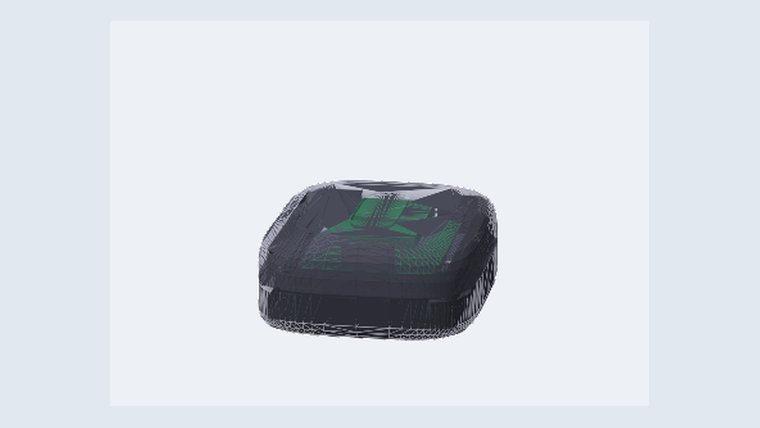
The current Flag Football app mode uses the same Blade hardware as the rest of HyperPulse. It does not create a different girls-only device or pretend to know exactly what happened on the field.
Estimated01
Current card
Route Bursts
Feature: route burst count. Function: identifies short explosive motion windows. Benefit: turns first-step practice work into an easy conversation.
What it does not mean
It is not GPS speed, yardage, an official game stat, or proof that a specific route was run.
Estimated02
Current card
Turns & Cuts
Feature: direction-change count. Function: looks for changes in body motion. Benefit: makes drill movement more visible without drawing a fake route map.
What it does not mean
It is not player separation, defender distance, or flag-pull detection.
Estimated03
Current card
Top Burst
Feature: highest motion-derived burst window. Function: shows the session's strongest burst reading. Benefit: gives practice a useful high point without claiming a ball or throwing stat.
How to use it
Compare it within the athlete's own drills and history, not across a public team leaderboard or an official timing system.
Estimated04
Current card
Freshness
Feature: late-session movement context. Function: compares movement patterns over the session. Benefit: gives a parent or coach a concise way to talk about the finish.
Important limit
This is not a medical fatigue, recovery, readiness, or play decision score.
What is different here
No GPS route map. No kid ranking. No mystery score.
The category angle is not more surveillance. It is a parent-readable record of the practice: what moved, how the session changed, and what an athlete can build on next time.
Girls Flag PracticeSAMPLE DATA
Warm-upDrillsFinish
How a 14+ pilot works
01 / SETUP
02 / PRACTICE
03 / REVIEW
Small, controlled, and useful.
Confirm the group and placement.
A parent-managed 14+ group starts with a coach who understands the test. Placement and use stay conservative.
Capture the session.
Run real practice drills. The coach sees the group workflow; each family keeps their own athlete's session story.
Keep only what helps.
Review whether the cards, graph, and session story are genuinely useful. Anything unsupported stays out of marketing.
Rules and answers
Built to be clear before it is clever.
We treat game use separately from practice use and let the local rulebook, coach, and officials decide what is allowed.
Can HyperPulse be used in a girls flag football game?
Maybe, but not automatically. Competition use depends on the league, school, event, officials, and governing-body rules. Every pilot begins in practice.
Does it track location or record audio?
No. Blade 1.0 has no GPS, cellular radio, or microphone. It is not a live-location or surveillance product.
Does it rank athletes or create recruiting data?
No. The parent-facing story focuses on an athlete's own practice history. HyperPulse makes no recruiting, scholarship, or scouting claims.
Why a girls flag page if the hardware is the same?
The hardware is the same. This page is the program layer: it gives a fast-growing girls sport its own pilot workflow, rule posture, and parent/coach conversation.
Girls flag football pilot
Bring the practice story to your team.
Tell us about one 14+ group, where they train, and what the coach wants to learn. We will keep the starting workflow practice-first and transparent.